Every other result on Google is either a brand selling their own food or a US site recommending products you cannot buy. This guide is independent, UK-focused, and calls out the hidden allergens that other guides ignore.
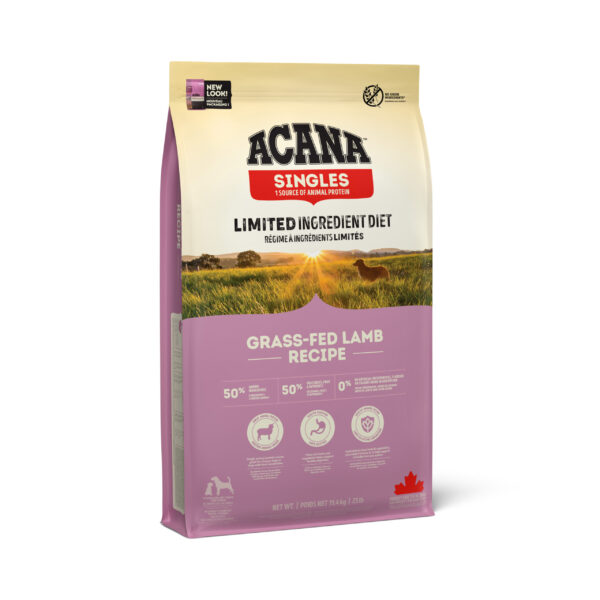
Best overall:Acana Singles Grass-Fed Lamb - true single animal protein (50% lamb), no hidden secondary proteins, no poultry fat. Also available in Duck and Pork.
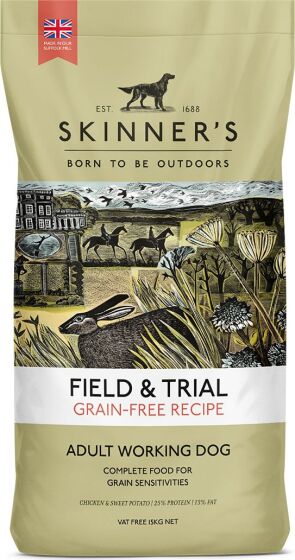
Best on a budget:Skinner's Field & Trial Grain Free Salmon - around £0.75/day. Uses sunflower oil instead of poultry fat. Under half the price of premium alternatives.
These terms get used interchangeably, but they are fundamentally different conditions that need different solutions.
Food Allergy
Food Intolerance
Involves immune system?
Yes. Attacks the protein as an invader
No. Digestive issue only
How common?
Rare (1–2% of dogs)
Common
Main symptoms
Skin: itching, ear infections, paw chewing, red skin
Digestive: loose stools, gas, vomiting, bloating
Triggered by
Specific proteins (beef, chicken, dairy most common)
Various ingredients the body struggles to process
Diagnosis
8–12 week elimination diet (the only reliable method)
Process of elimination
Treatment
Avoid the trigger protein permanently
Avoid the trigger ingredient, support gut health
Involves immune system?
Food Allergy
Yes. Attacks the protein as an invader
Food Intolerance
No. Digestive issue only
How common?
Food Allergy
Rare (1–2% of dogs)
Food Intolerance
Common
Main symptoms
Food Allergy
Skin: itching, ear infections, paw chewing, red skin
Food Intolerance
Digestive: loose stools, gas, vomiting, bloating
Triggered by
Food Allergy
Specific proteins (beef, chicken, dairy most common)
Food Intolerance
Various ingredients the body struggles to process
Diagnosis
Food Allergy
8–12 week elimination diet (the only reliable method)
Food Intolerance
Process of elimination
Treatment
Food Allergy
Avoid the trigger protein permanently
Food Intolerance
Avoid the trigger ingredient, support gut health
Important
If your dog's symptoms are primarily digestive (loose stools, gas, vomiting), you are more likely dealing with a food intolerance than a true allergy. Our sensitive stomach guide may be more relevant. If the symptoms are skin-based (itching, ear infections, paw chewing), continue reading.
When to see a vet
Persistent itching or ear infections, skin that is broken or bleeding from scratching, hair loss, severe digestive symptoms, or any sudden change. Do not attempt to diagnose a food allergy yourself. Environmental allergies (pollen, dust mites, mould) are far more common and need different treatment. Your vet can help distinguish the two.
The Most Common Food Allergens
Based on a systematic review published in BMC Veterinary Research, these are the most frequently identified food allergens in dogs:
Allergen
Prevalence
Notes
Beef
34%
The most common allergen, and also the most common ingredient in dog food
Chicken
15%
Includes chicken fat and chicken oil in some cases
Corn
4%
Often listed as maize
Dairy
17%
Includes milk, cheese, yoghurt, and whey
Egg
4%
Found in many cold-pressed and grain-free formulas
Fish
2%
Low allergen risk. A good alternative protein
Lamb
5%
Once considered novel but now common enough to cause reactions
Pork
2%
Genuinely rare. One of the better novel protein options
Soy
6%
Found in many budget dog foods
Wheat
13%
The most common grain allergen
Sort by:
Beef
Prevalence
34%
Notes
The most common allergen, and also the most common ingredient in dog food
Chicken
Prevalence
15%
Notes
Includes chicken fat and chicken oil in some cases
Corn
Prevalence
4%
Notes
Often listed as maize
Dairy
Prevalence
17%
Notes
Includes milk, cheese, yoghurt, and whey
Egg
Prevalence
4%
Notes
Found in many cold-pressed and grain-free formulas
Fish
Prevalence
2%
Notes
Low allergen risk. A good alternative protein
Lamb
Prevalence
5%
Notes
Once considered novel but now common enough to cause reactions
Pork
Prevalence
2%
Notes
Genuinely rare. One of the better novel protein options
Soy
Prevalence
6%
Notes
Found in many budget dog foods
Wheat
Prevalence
13%
Notes
The most common grain allergen
The pattern is clear: dogs develop allergies to proteins they eat most frequently. Beef, chicken, and dairy dominate both the allergen list and commercial dog food ingredient lists. This is not a coincidence. It is also why novel proteins (duck, venison, pork, insect) work well for allergic dogs - the immune system has never been exposed to them.
Breeds more prone to food allergies
Labrador Retrievers, West Highland White Terriers, Cocker Spaniels, Boxers, German Shepherds, Golden Retrievers, Pugs, and Rhodesian Ridgebacks show higher incidence of food allergies. However, any dog of any breed (including mixed breeds) can develop them. A family history of allergies is a stronger predictor than breed alone.
How We Picked These Foods
We are not a dog food brand. We do not sell dog food. We reviewed every hypoallergenic and allergy-suitable dog food available in the UK and selected these 9 based on:
Genuine avoidance of common allergens, not just marketing claims
Transparent protein sourcing: named single proteins, not vague "meat meal"
Hidden allergen audit. We checked every ingredient list for secondary animal proteins like "poultry fat", "animal fat", and unspecified gelatin
Prebiotics and gut support: functional ingredients, not just gentle-sounding marketing
UK availability. Every product is widely available from UK retailers
Value. Real cost per day, not just sticker price
The hidden allergen problem: Many UK dog foods labelled “hypoallergenic” contain secondary animal proteins hidden in the ingredient list, typically as “poultry fat”, “animal fat”, or “refined chicken oil”. Manufacturers argue refined fats contain no protein and cannot trigger reactions. Real-world reports from dog owners say otherwise. We flag every instance of this in our reviews below.
Our Picks
9 foods, each the best in its category. Use the filters to narrow by format, budget, or to exclude chicken-containing products.
True single animal protein - 50% lamb from 5 different cuts
No hidden secondary proteins, no poultry fat
Chicory root prebiotic for gut support
Lamb is a minor allergen (5% prevalence) - not suitable if your dog reacts to lamb
Legume-heavy carb base (peas, lentils, chickpeas)
The strongest all-round choice for dogs with identified food allergies. Acana Singles uses 50% lamb from five different cuts (raw, meal, liver, tripe, kidney) with zero secondary animal protein sources. No vague "poultry fat" or unnamed ingredients. Also available in Duck and Pork variants if your dog tolerates those instead. The legume base may concern some owners, but for dogs whose primary issue is protein sensitivity, this is as clean as dry food gets.
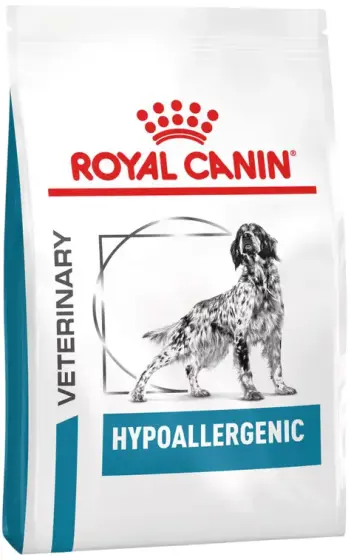
Hydrolysed protein broken down so the immune system cannot recognise it
Proven in clinical settings for elimination diets
Contains FOS prebiotics
Very expensive per kg
Contains vague "animal fats" alongside the hydrolysed protein
If your vet suspects a food allergy, a hydrolysed diet is the gold standard for diagnosis. Royal Canin breaks the protein down into peptides so small that the immune system cannot mount a response. This makes it essential for elimination diet trials. One thing to note: the ingredient list includes unspecified "animal fats" alongside the hydrolysed protein, which is less transparent than ideal. For the most extensive hydrolysis, ask your vet about Royal Canin Anallergenic (feather hydrolysate) which goes even further.
Not a true single-protein food - contains multiple plant proteins
By far the most affordable option that genuinely avoids common allergens. The salmon variant specifically uses sunflower oil rather than the "poultry fat" found in many competitors (including Skinner's own duck variant - choose the salmon). Contains both FOS and MOS prebiotics. At under £4/kg in the 15kg bag, it is less than half the price of most hypoallergenic foods. The trade-off is a fairly basic formulation without standout nutritional features.
Complementary only - not nutritionally complete on its own
Must be mixed with a complete food or supplements
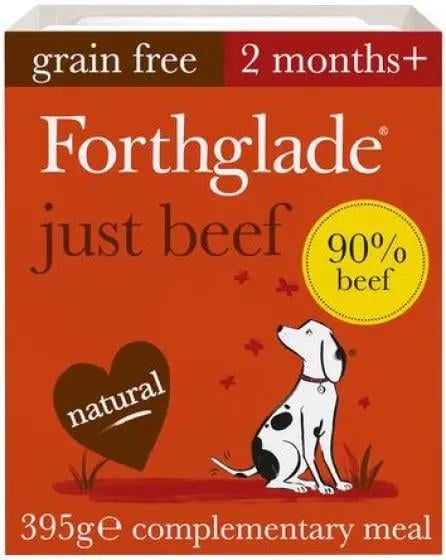
If you need to identify exactly what your dog can and cannot tolerate, you will not find a simpler ingredient list than this. Forthglade Just 90% contains a single protein source (90%) and minerals. That is it. Choose the duck or turkey variant to avoid the most common allergens. It is complementary rather than complete, so you will need to pair it with a carbohydrate source and supplements for long-term feeding. But for the elimination phase, or as a mixer alongside a hypoallergenic dry food, it is unmatched.
Triple gut support: prebiotic FOS, MOS, and a postbiotic
41% salmon - single animal protein, chicken-free
Specifically formulated for digestive health
Better suited for intolerances than true immune-mediated allergies
Contains multiple botanical ingredients - not a limited ingredient diet
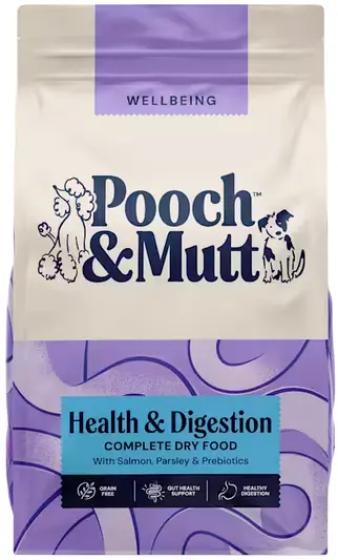
If your dog's symptoms are primarily digestive (loose stools, gas, vomiting) rather than skin-based (itching, ear infections), the issue is more likely a food intolerance than a true allergy. Pooch & Mutt is the strongest option for this scenario, with prebiotic FOS, MOS, a postbiotic, and psyllium husk all targeting gut function. The 41% salmon is a single animal protein with no hidden chicken. Not ideal for dogs with confirmed immune-mediated allergies who need a strict limited ingredient diet.
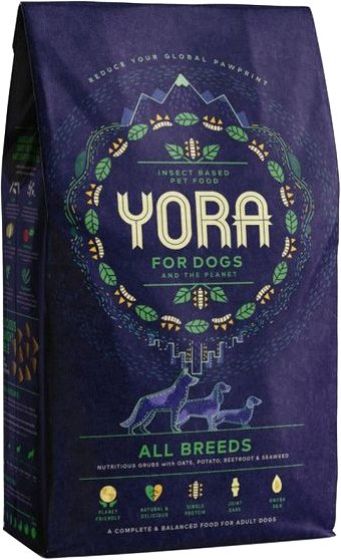
Insect protein is genuinely novel - almost no dog will have been previously exposed to Black Soldier Fly larvae, making it an excellent choice when common proteins all cause reactions. The natural glucosamine content is a bonus for joint health. However, there is a significant caveat that Yora does not prominently disclose: the chondroitin in their formula is sourced from avian (bird) cartilage, which could trigger reactions in dogs with chicken allergies. It is also not grain-free, containing both oats and maize. Dogs with dust mite allergies may also cross-react with insect chitin.
Cold pressed at low temperature - preserves more nutrients
Dissolves in the stomach rather than swelling like extruded kibble
Grain-free with chicory root prebiotic and MOS
Contains gelatin of unspecified animal origin
Not a true single-protein food
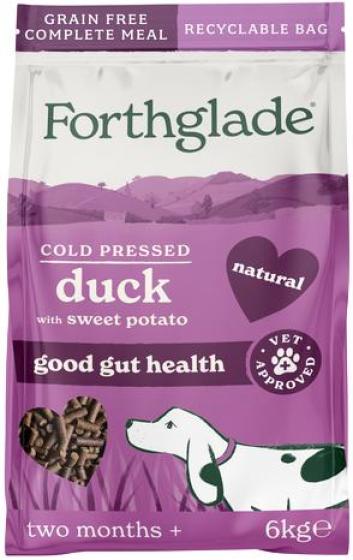
Cold pressing uses lower temperatures than standard extrusion, preserving more natural nutrients and producing food that breaks down gently in the stomach rather than swelling. The salmon variant avoids common terrestrial allergens. It includes chicory root prebiotic and MOS for gut health. The concern for allergy-prone dogs is the unspecified gelatin - this could be beef or pork derived, and Forthglade does not clarify the source. If your dog has multiple allergies, this uncertainty is a risk.
Register your dog's allergies and recipes are automatically adjusted
Single-protein recipes with no cross-contamination in manufacturing
Human-grade, gently cooked and frozen
Significantly more expensive, especially for larger dogs
Requires freezer space and planning ahead
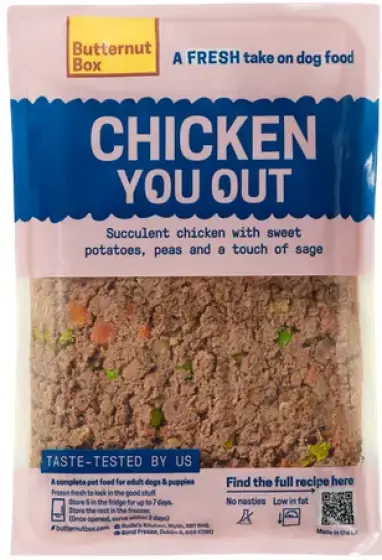
When you sign up, Butternut Box asks what your dog is allergic to and automatically excludes those ingredients across all meals. Single-protein recipes are available, and the manufacturing process prevents cross-contamination between protein lines. The food is human-grade, gently cooked at 90 degrees C, and frozen. For dogs with multiple or severe allergies, this level of control is genuinely valuable. The trade-off is cost: expect upwards of £3.40/day for a small dog, considerably more for larger breeds.
Available everywhere - every pet shop, supermarket, and vet practice
Contains prebiotic FOS from chicory extract
Reformulated in 2025 to include poultry fat - no longer reliably chicken-free
Multiple Trustpilot reports of allergic reactions after the reformulation
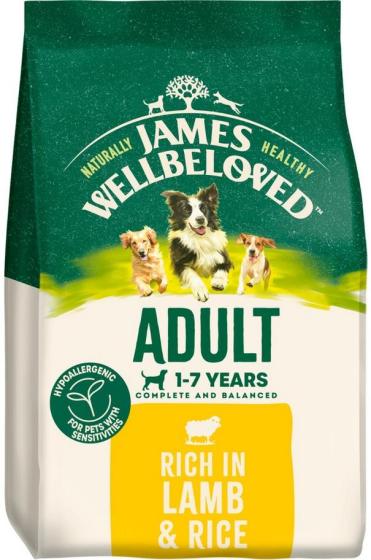
James Wellbeloved has been the go-to hypoallergenic recommendation in UK vet practices for years, and it is available absolutely everywhere. However, we cannot recommend it without a significant warning: in 2025, the brand reformulated to include poultry fat (likely chicken-derived) across their range. Multiple owners have reported on Trustpilot that their chicken-allergic dogs had severe reactions after the change. JWB argues that refined fats contain no protein, but real-world reports tell a different story. If your dog has a confirmed chicken allergy, this food is no longer a safe choice despite its "hypoallergenic" label.
Three different approaches, each suited to a different situation:
Hydrolysed protein diets
Best for: diagnosing food allergies, severe cases
Proteins are broken into fragments so small the immune system cannot recognise them. The gold standard for elimination diet trials. Royal Canin Anallergenic and Hill's z/d are the most extensively hydrolysed options in the UK (both require vet recommendation). Royal Canin Hypoallergenic is a partially hydrolysed OTC option.
Novel protein diets
Best for: dogs with identified triggers, long-term feeding
Uses a protein your dog has never eaten before, so the immune system has no reason to react. Good long-term options include duck, venison, pork, fish, and insect protein. Works well when you know what your dog reacts to and just need to avoid it. Acana Singles, Burns Sensitive Pork, and Yora insect protein are strong choices.
Limited ingredient diets (LID)
Best for: identifying triggers, reducing overall allergen load
Fewer ingredients means fewer potential triggers. Forthglade Just 90% (two ingredients) is the extreme version. Burns Sensitive (8–9 ingredients) is a more practical everyday LID. Useful when you want to simplify your dog's diet but do not need the clinical precision of a hydrolysed diet.
Which should you choose? If your dog has never been formally diagnosed, start with your vet and a hydrolysed diet for 8–12 weeks. If you already know the trigger (e.g. chicken), switch to a novel protein that avoids it. If you want a simpler diet to reduce overall risk, try a limited ingredient food. The three approaches are not mutually exclusive. Many owners use a hydrolysed diet for diagnosis, then transition to a novel protein for long-term feeding.
How to Run an Elimination Diet
The only reliable way to diagnose a food allergy. This is not something to attempt casually - work with your vet.
1
See your vet
Rule out environmental allergies (far more common), infections, and other conditions. Your vet may recommend a specific hydrolysed diet.
2
Choose the trial food
A veterinary hydrolysed diet (Royal Canin Anallergenic, Hill's z/d) is most reliable. Alternatively, a genuinely novel single-protein food your dog has never eaten.
3
Feed ONLY the trial food for 8-12 weeks
No treats, no table scraps, no flavoured medications, no flavoured toothpaste, no rawhide chews. Nothing except the trial food and water. This is the hardest part.
4
Monitor symptoms
Skin symptoms may take 4-8 weeks to improve. Digestive symptoms often improve within 1-4 weeks. Keep a daily diary.
5
Challenge phase
After 8-12 weeks, reintroduce the original diet. If symptoms return (typically within 1-3 days, sometimes up to 2 weeks), a food allergy is confirmed.
6
Identify the specific trigger
Add one ingredient at a time back to the trial diet, waiting 1-2 weeks between each. This identifies exactly which protein(s) cause the reaction.
7
Transition to a long-term diet
Once you know the trigger, choose a long-term food that avoids it. This can be a novel protein diet, a limited ingredient food, or even the hydrolysed diet if your dog does well on it.
Do not use saliva, hair, or blood tests
Tests marketed for diagnosing food allergies in dogs via saliva, hair, or blood samples are not scientifically validated. Veterinary dermatologists consistently advise against them. They often produce inaccurate results that lead to unnecessarily restricted diets. The elimination diet is the only reliable diagnostic method.
What to Look For (and Avoid)
Look for
Named single protein source as the first ingredient
Novel proteins: duck, venison, pork, fish, insect
Short, transparent ingredient list
Specific fat sources (e.g. "duck fat" not "poultry fat")
Prebiotics: FOS, MOS, inulin
"Complete" food: provides all required nutrients
Avoid
"Poultry fat" or "animal fat": unspecified sources that could be chicken
"Animal derivatives" or unnamed "meat meal"
Beef, chicken, and dairy: the top 3 allergens
Wheat and soy: common plant allergens
"Hypoallergenic" label without checking the full ingredient list
Multiple protein sources when you are trying to identify a trigger
The “poultry fat” problem
Many UK dog foods marketed as “hypoallergenic” or positioned as alternatives to chicken contain unspecified “poultry fat” in their ingredient list. This is almost certainly chicken-derived. Manufacturers argue that refined fats contain no protein and therefore cannot trigger immune responses. However, multiple dog owners report their chicken-allergic dogs reacting to these foods.
Foods in our list with this issue: James Wellbeloved (reformulated in 2025 to include poultry fat across the range), Arden Grange Sensitive (contains “refined chicken oil”), and Yora (contains chondroitin from avian cartilage). We flag these in our product reviews so you can make an informed choice.
The grain-free myth
“Grain-free” is not the same as “hypoallergenic”. Wheat accounts for about 13% of food allergy cases, but rice causes reactions in only 2% of dogs. Most food allergies are to animal proteins, not grains. A grain-free food containing chicken is far more likely to trigger a reaction than a rice-based food containing duck.
Many grain-free formulas substitute legumes (peas, lentils, chickpeas) which can cause digestive upset and have been linked to concerns about dilated cardiomyopathy (DCM). Choose grain-free only if your dog has a confirmed grain allergy.
Tips for Managing Food Allergies
Check treat ingredients with the same scrutiny as food
The most carefully chosen hypoallergenic food will not help if your dog is getting chicken-based treats, dental chews, or flavoured supplements. Every single thing that goes in your dog's mouth matters during an elimination trial.
Transition gradually over 7–14 days
Even when switching to a hypoallergenic food, introduce it gradually. Mix increasing proportions of the new food with decreasing proportions of the old food over 7 to 14 days. A sudden switch can cause digestive upset that confuses the picture.
Keep a symptom diary
Track what your dog eats, any treats or extras, and the severity of symptoms daily. Patterns often become obvious within a few weeks and this record is invaluable for your vet.
Be patient: skin symptoms take weeks to resolve
Digestive symptoms from food intolerances can improve within days of removing the trigger. But skin symptoms from true food allergies take 4 to 8 weeks to resolve because the immune response needs time to calm down. Do not give up after 2 weeks.
Allergies can develop at any age
Dogs develop allergies to proteins they have been eating for a long time, not new foods. A dog can eat the same food happily for years and then suddenly start reacting. This is normal and does not mean the food changed. The dog's immune system changed.
Consider the long term
Once you identify a safe diet, stick with it. Rotating proteins sounds healthy but can sensitise your dog to additional proteins over time, narrowing your options. Find what works and maintain it.
Graham is a professional dog trainer and co-founder of Furra, with over ten years of experience living and working with dogs. His journey began with two remarkable Shar Pei, Bane and Ivy, who shaped everything he knows about dog welfare, nutrition, and what it means to truly care for a dog. Both are dearly missed. Today he shares his life with Stella, a Goldador who goes everywhere with him, including up quite a few mountains. The frustration of navigating a pet food market full of vague claims and poor transparency drove Graham to build Furra: a platform that gives dog owners honest, data-driven information so they can make genuinely better choices for their dogs.